Our Vineyards
Four distinct parcels expressing the landscape and heritage of Poggio Murella
Four Vineyards, One Natural Philosophy
Ranchelle cultivates 4 hectares of vineyards in the hills of Poggio Murella, in the Tuscan Maremma. The estate includes one 60-year-old mixed vineyard and three younger parcels planted between 2015 and 2017. Each vineyard plays a unique role in shaping the character of Ranchelle’s natural wines.
All vineyards are farmed according to organic and biodynamic principles. Annual green manures enrich the soil, insect treatments are limited to small amounts of copper and sulfur (around 25% of what is permitted in organic agriculture), and no synthetic chemicals are ever used. Every parcel is managed through massal selection, preserving the genetic diversity and resilience of historic Maremman varieties.
1. Old Millocchio Vineyard
1 hectare · ~60 years old · mixed native field blend
The historic Millocchio vineyard sits on a hillside just above the village of Poggio Murella. Planted more than 60 years ago, it is one of the few surviving traditional field-blend vineyards of the Maremma, a living archive of the region’s viticultural history.
Most old vineyards in the area were uprooted in recent decades and replaced by international varieties, but Millocchio still contains a remarkable mosaic of native grapes:
- Red varieties: Alicante, Ciliegiolo, Barbera, Bonamico, Cannaiolo, Mammolo, Sangiovese, Malvasia Nera, Pugnitello
- White varieties: Procanico, Ansonica, Francesino (Clairette), Trebbiano, Malvasia Bianca
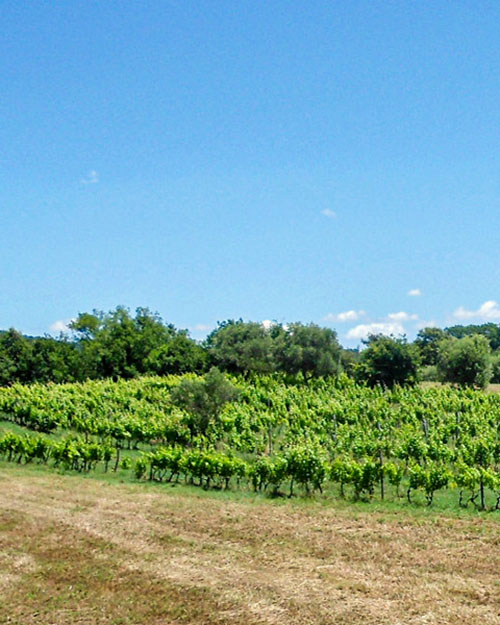
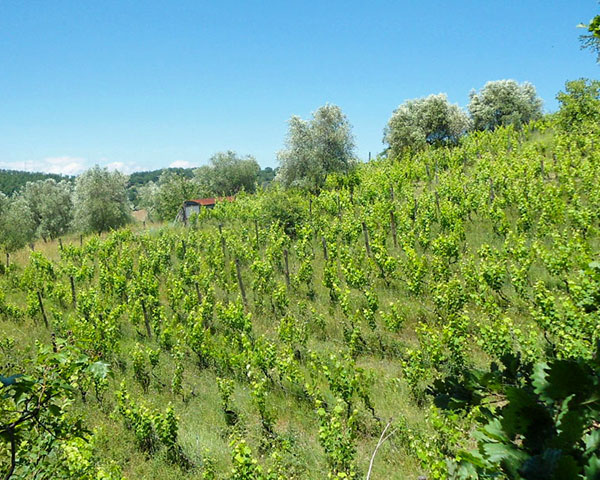
The vineyard is cultivated with natural viticulture: annual green manures, no synthetic inputs, and minimal copper and sulfur. Its deep roots and genetic diversity create wines of depth, structure, and authenticity.
Wines produced:
2. Pergolacce Vineyard
1 hectare · Planted 2015 · Alicante & Ciliegiolo
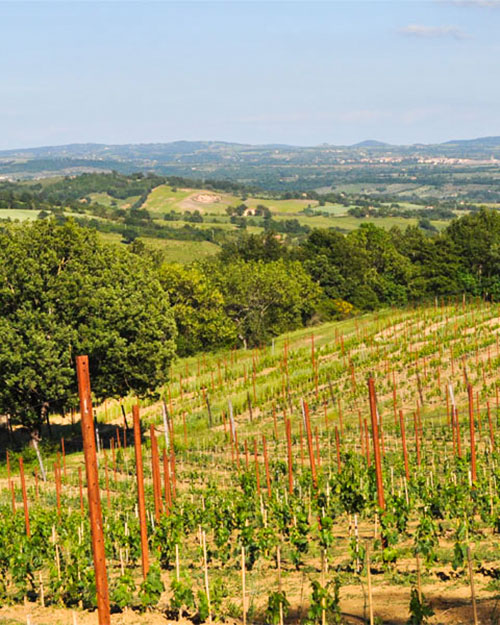
Pergolacce was planted in 2015 on land previously used for grains and legumes (barley, spelt, peas, clover). The soil was prepared through green manure in 2013 and deep tilling in 2014 before massal-selected cuttings were planted.
The site lies around 350 m above sea level, just outside Poggio Murella, on balanced soils of shale, silt, and clay.
The vines were propagated using the massal selection method; grafting cuttings taken from historic vineyards of the Maremma (notably from Antonio Camillo). This preserves natural genetic variation and produces vines more capable of adapting to the local environment than clonal selections.
The vineyard is farmed naturally: annual cover crops, and only minimal copper and sulfur treatments.
Wines produced:
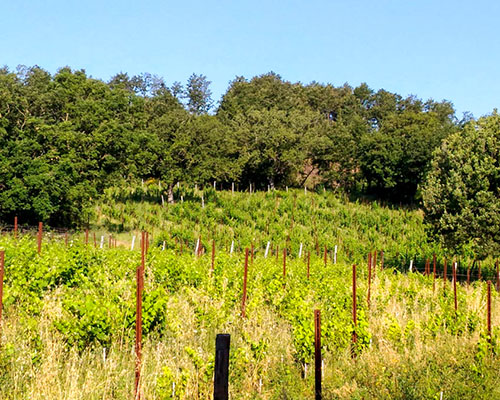
3. Roccolina Vineyard
1 hectare · Planted 2015 · Native white varieties
Also planted in 2015, Roccolina lies in an area historically named “Roccolina” on old cadastral maps. Like Pergolacce, this parcel was once used for grains and legumes and was prepared with green manure in 2013 and deep tilling in 2014.
This vineyard was planted exclusively with native white grapes typical of the historic wine tradition of Pitigliano:
-
Procanico
-
Clairette (Francesino)
-
Riminese (Duropersico)
-
Nocchianello Bianco
-
Verdello
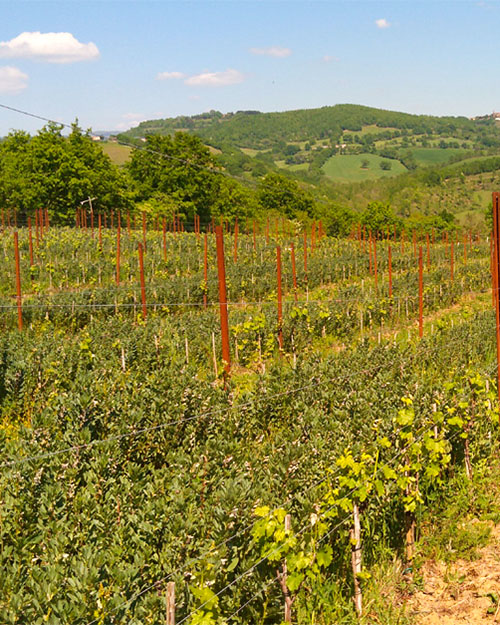
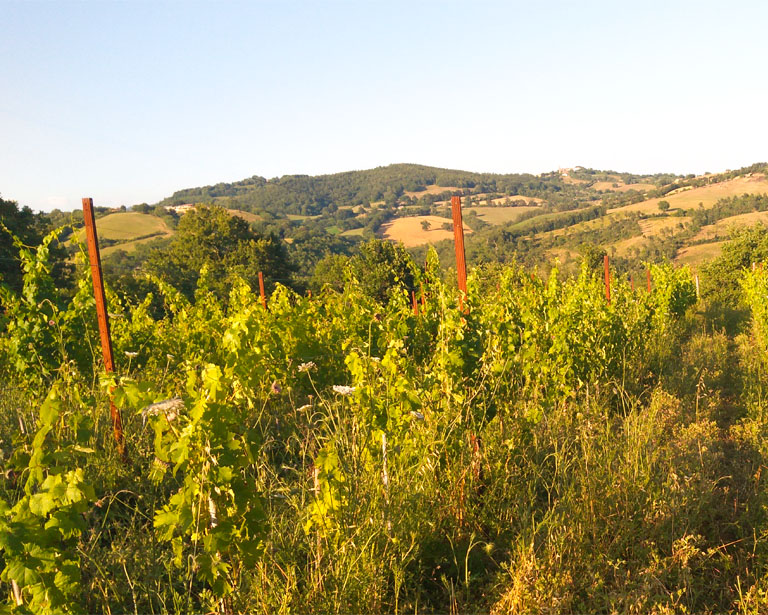
The massal-selected cuttings come from notable vineyards in Pitigliano, Gradoli, Manciano, and Saturnia (Italo Ferri, Gianmarco Antonuzi, Antonio Camillo, Ugo Piccolo).
The soil and altitude (350 m) give freshness, minerality, and aromatic lift.
Wines produced:
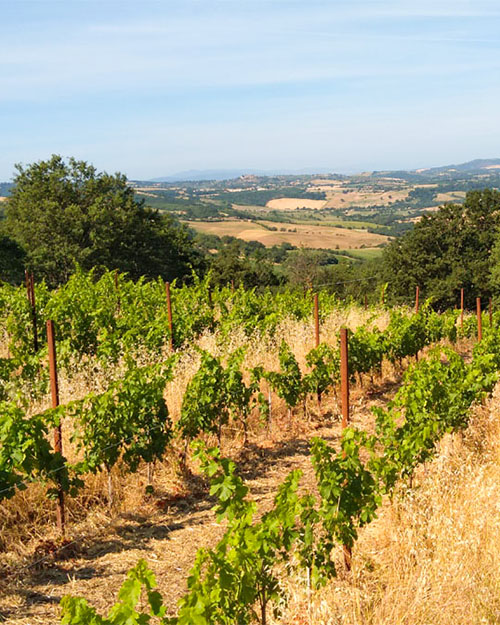
4. Poggio Mattio Vineyard
1.5 hectares · Planted 2016 · Ansonica & red native grapes
Planted in 2016 on land left uncultivated for several years, Poggio Mattio sits at 400 m altitude on a panoramic ridge with sweeping 360° views towards the sea of Monte Argentario.
The soil composition mirrors the other parcels: shale with silt and clay, offering excellent balance and drainage.
As with all Ranchelle vineyards, the vines were propagated through massal selection, using cuttings from historic Maremman vineyards.
Poggio Mattio is divided into two halves:
- White grapes: Ansonica
- Red grapes: Alicante, Aleatico, Mammolo, Buonamico
These grapes bring tension, aromatic brightness, and structure to several wines.
Wines produced:
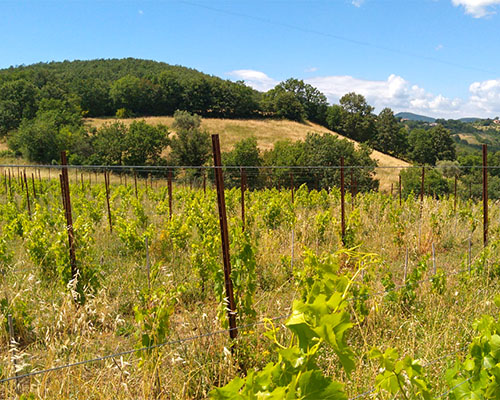
A Living Agricultural Heritage
Across these four vineyards, from the ancient Millocchio to the young massal-selected parcels, Ranchelle works to protect the historic wine identity of the Tuscan Maremma.
Each parcel brings its own voice, and together they form the foundation of Ranchelle’s natural wines: expressive, additive-free, and deeply tied to the land.